Blogs Ecommerce Quiz Types
Ecommerce Quiz: 6 Types, With Examples and When to Use Each
An ecommerce quiz is any quiz an online store uses to guide a purchase. There are six common types. Here is what each one is for, an example of each, and how to choose.

AISalesQ Team
Updated on October 10, 2026 - 5 min read
What an Ecommerce Quiz Is
An ecommerce quiz is a set of questions on an online store that leads a shopper to a product, a set of products or a result about themselves. Its purpose is commercial: it helps someone decide what to buy, and it tells the store something useful about that shopper.
It is different from a knowledge quiz or a survey. There are no right answers and no grade, and the shopper gets something immediately: a recommendation.
Most ecommerce quizzes are a kind of product recommendation quiz. The six types below differ in what they recommend and in how the result is worked out.
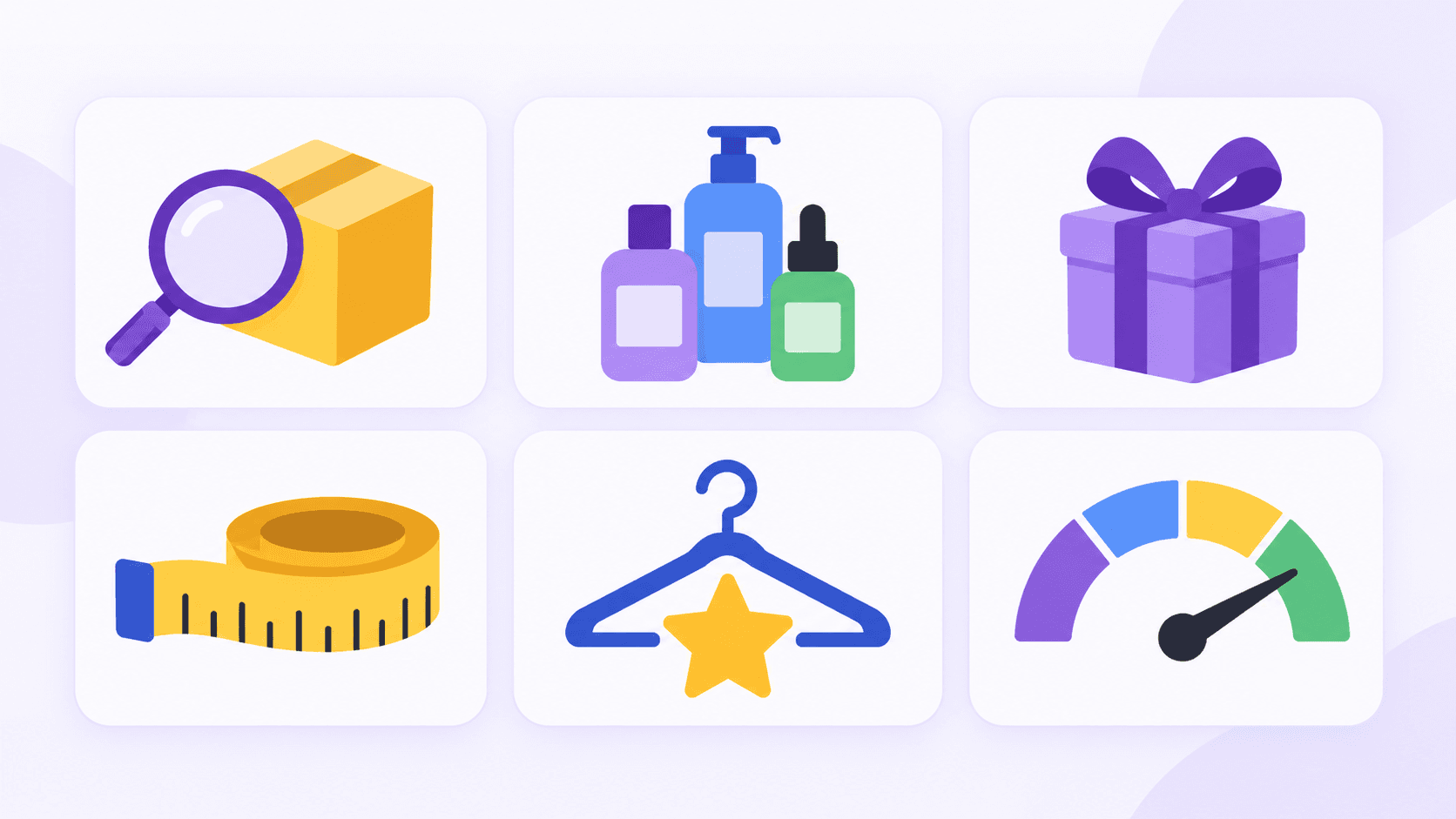
The 6 Types of Ecommerce Quiz
1. Product finder
A product finder narrows a catalog to the few products that fit one shopper. It asks practical questions and returns a short list. A coffee finder or a bicycle finder is a typical example.
Use it when you sell many similar products and shoppers ask which one is right for them. It is the most common type and the simplest to build. See how to build a product finder quiz for Shopify.
2. Routine or bundle builder
A routine builder recommends several products that work together: a skincare routine, a capsule wardrobe, a stack of jewelry. The result is a set, often with one button that adds everything to the cart.
Use it when your products are meant to be combined. The recommendation is the whole set, so it only works if the set genuinely belongs together.
3. Gift finder
A gift finder asks about the recipient, the occasion and the budget instead of the shopper's own preferences. A gift concierge quiz is an example.
Use it when a meaningful share of your orders are gifts, and feature it before the seasons when that share is highest. Budget is the question that matters most, so ask it plainly.
4. Fit or size quiz
A fit quiz helps a shopper choose a cut or shape that suits them. A denim fit finder that narrows by rise, leg shape and stretch is an example.
Use it when fit is the main reason for hesitation or returns. Be careful with what you promise: a quiz can guide a shopper toward a suitable cut, and it cannot measure them.
5. Style or personality quiz
A style quiz gives the shopper a named result, such as a style archetype, with products to match. It is the most shareable type, because people like learning something about themselves.
Use it when taste drives the purchase more than function. Make sure each result leads to products a shopper would actually want, or the quiz entertains without selling.
6. Assessment
An assessment scores the shopper's answers and shows the outcome, sometimes as a gauge or chart, before recommending products. A nutrition quiz or a hair-care assessment is an example.
Use it when shoppers want to understand their situation before buying. The result should stay descriptive. A store quiz is not a medical or professional diagnosis, and should not be worded like one.
How to Choose a Type
Ask what stops your shoppers from buying. If it is too much choice, build a product finder. If they do not know what goes together, build a routine or bundle builder. If they are buying for someone else, build a gift finder. If they worry it will not fit, build a fit quiz. If they are browsing for taste, build a style quiz. If they are unsure what their problem is, build an assessment.
Start with one. A single quiz placed where shoppers hesitate will teach you more than three quizzes nobody finds.
What Every Type Has in Common
Underneath, the six types are built from the same parts: questions, logic that decides which question comes next, a rule that turns answers into a result, and a result page with a clear next step.
The rule is the main difference. Finders and gift quizzes usually attach products directly to answers. Routine builders, style quizzes and assessments usually score answers into categories, and the top category decides the result. In AISalesQ's Shopify quiz builder you can use either approach in the same quiz.
What to Do With the Answers
Every type produces the same by-product: a record of what a shopper told you. If the shopper also leaves an email address and consents to marketing, you can follow up with something relevant to their result.
That is where much of a quiz's value comes from, because most shoppers do not buy on the first visit. A sequence that refers to the recommended products, and stops when the shopper orders, is covered in what to send after someone finishes your Shopify quiz.
Keep the data proportionate. Ask only what you will use, and be clear about why you are asking.
Mistakes to Avoid
Choosing a type because it looks fun instead of because it removes a real obstacle to buying.
Building a style quiz whose results all lead to the same few products.
Wording an assessment as if it were professional advice.
Writing more questions than the result needs.
Launching the quiz on a page nobody visits, then concluding quizzes do not work for your store.
Getting Started
Pick the type that matches your shoppers' main hesitation, then start from a template in that category so the structure is already in place. AISalesQ's quiz templates cover fashion, beauty, jewelry, fitness, home and pets, and each can be edited to fit your catalog.
Publish it where shoppers hesitate, watch where they drop off, and adjust one thing at a time. Pricing starts with a free plan, which is enough to publish one quiz and see whether your shoppers use it.
Keep reading
You might also like
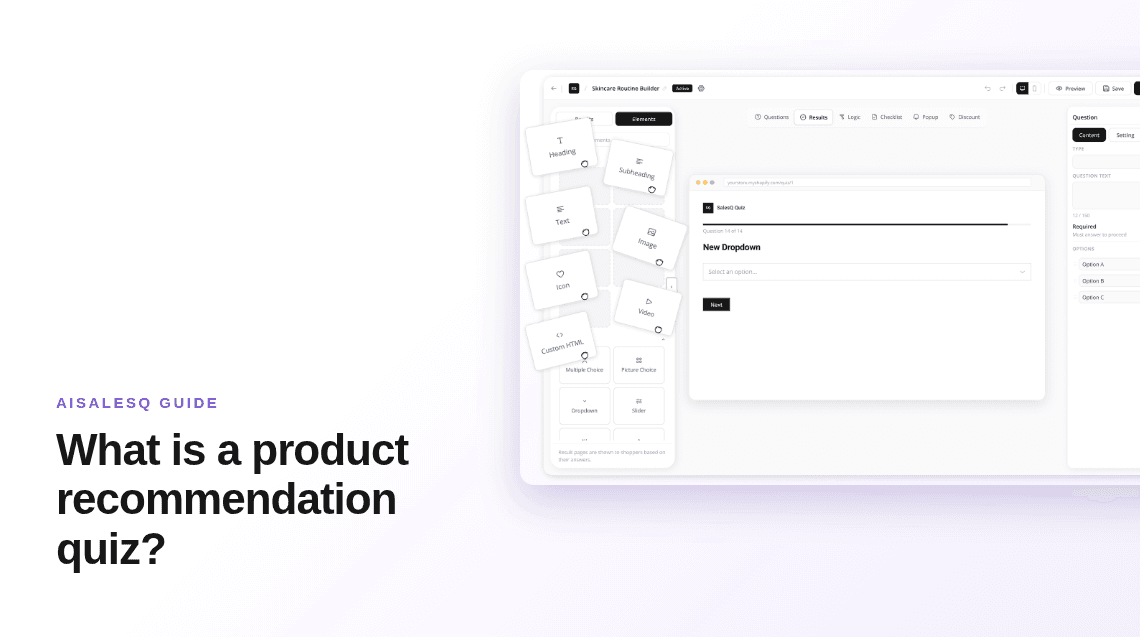
What Is a Product Recommendation Quiz? How It Works
A product recommendation quiz asks shoppers a few questions and matches the answers to products. How the matching works, what to ask, and where it pays off.
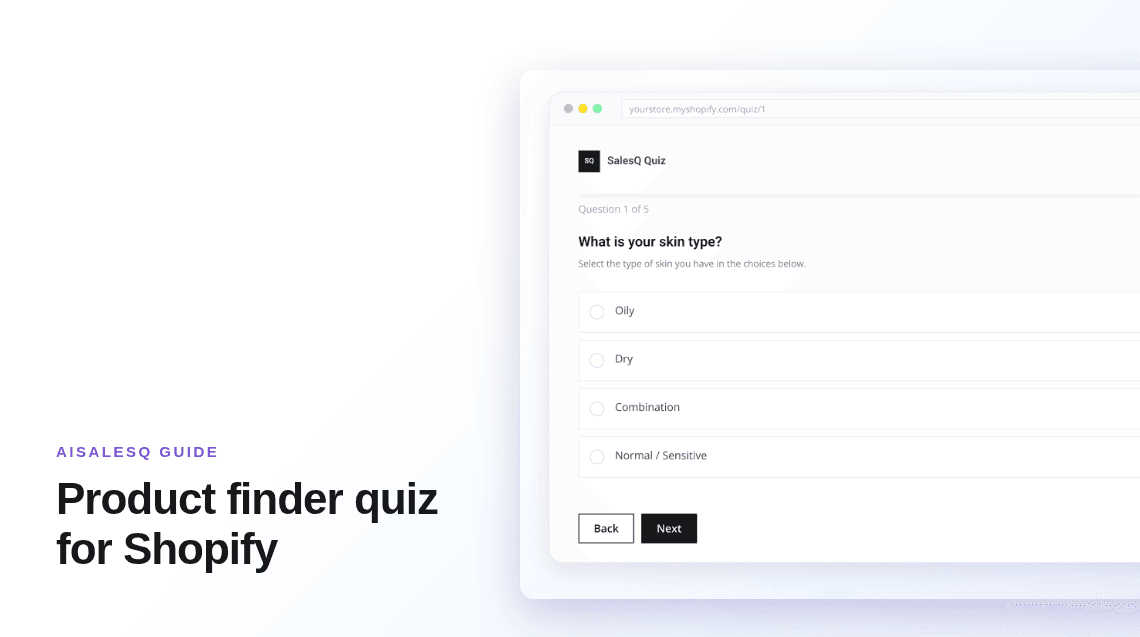
Product Finder Quiz for Shopify: How to Build One
A product finder narrows a catalog to the few items that fit one shopper. The questions, the matching rules, and the Shopify setup, in order.
What to Send After Someone Finishes Your Shopify Quiz
Your quiz told you exactly what the shopper needs. Here is a simple five-email plan to turn that knowledge into sales, with clear timing, stop rules, and tracking.
Common questions
Questions about ecommerce quizzes.
Short answers on types, uses and getting started.
It is a set of questions on an online store that guides a shopper to a product, a set of products or a personal result, and gives the store useful information about that shopper.
The six common types are the product finder, the routine or bundle builder, the gift finder, the fit or size quiz, the style or personality quiz, and the assessment.
Usually a product finder. It is the simplest to build and addresses the most common obstacle, which is too much choice.
Choose another type first only if your shoppers' main hesitation is clearly something else, such as fit or gifting.
Less often. If a shopper can compare all your products at a glance, a clear product page does more than a quiz.
A quiz earns its place when choosing between products is the hard part.
Yes. A routine builder can start like a product finder, and an assessment can end with a product set. The types describe the goal, not a technical limit.
Have a question that isn’t answered here?
Contact the AISalesQ team directly
Newsletter
Subscribe to new posts